POC, DOM & Level 3 Data Explained
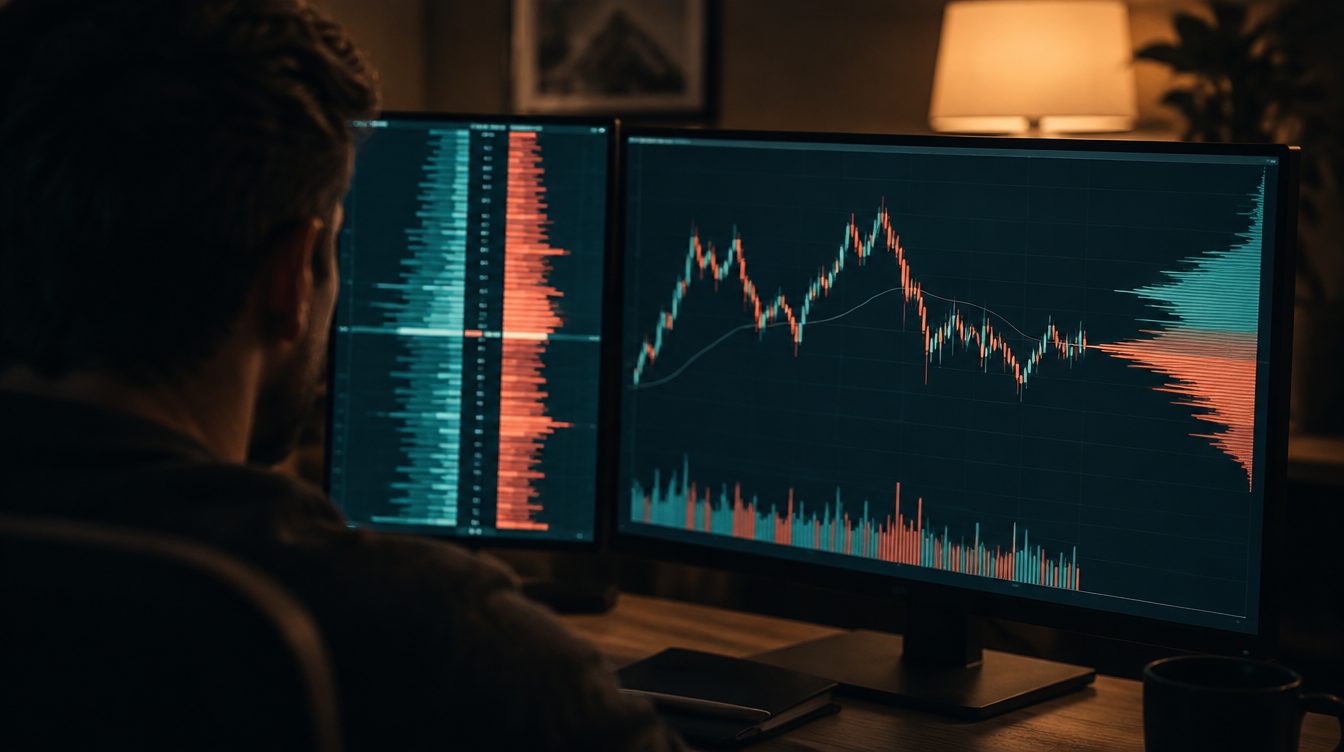
Short answer: POC (point of control) is the price where the most volume traded over a period. DOM (depth of market) is the live ladder of buy and sell orders at each price. Level 3 data is the top tier of market data, which lets registered market makers enter and change quotes, not just see them. Together they help traders see where business is actually being done.
What is POC in trading?
The point of control comes from a volume profile, a sideways histogram showing how much volume traded at each price. The POC is the longest bar: the price the market spent the most business at, and the price it treated as "fair". Traders watch it because price often returns to it, and because it can act as support or resistance.
- Value area: the range where about 70% of the volume traded, around the POC.
- VAH / VAL: value area high and value area low, the edges of that range.
- Naked POC: a previous session's POC that price hasn't returned to yet. Many traders treat it as a target.
What is IBH in trading?
IBH stands for initial balance high, the high of the first hour of the regular session (9:30–10:30 a.m. ET for US index futures). Its partner is IBL, the initial balance low. In market profile analysis, a break and hold beyond the initial balance often signals a trending day.
What is DOM in trading?
The depth of market, also called the order book or price ladder, shows resting limit orders at each price level above and below the market. Bids sit below the last price and offers above. Many futures day traders place and move orders directly on the DOM with one click, which makes it popular for scalping in tick-sized moves.
Be aware that resting orders can be pulled at any time, so a big bid on the DOM is not a guarantee of support.
Level 1, Level 2 and Level 3 data
| Level | What you see or do | Who uses it |
|---|---|---|
| Level 1 | Best bid, best ask, last price and volume | All traders |
| Level 2 | Bids and offers at multiple price levels (market depth) | Active and day traders |
| Level 3 | Level 2 depth, plus the ability to enter and change quotes | Registered market makers and brokers |
Retail traders typically use Level 1 and Level 2. In futures, "market depth" on the DOM is the equivalent of Level 2.
Putting them together
- Mark yesterday's POC and value area before the open.
- Watch the initial balance (IBH and IBL) form in the first hour.
- Use the DOM to time entries when price reaches one of those levels.
This fits naturally with a level-based approach such as our ES futures strategy.
FAQs
Is POC support or resistance?
It can be either. Price often gravitates back to the POC, and it can stall there because it's the fairest price.
Do I need Level 2 to day trade?
No, but depth data helps short-term traders judge liquidity and spreads.
Is DOM trading the same as order flow trading?
It's a part of it. Order flow trading also uses tools like footprint charts and cumulative delta.
For education only, not financial advice. Futures, forex and stock trading involve substantial risk of loss.